

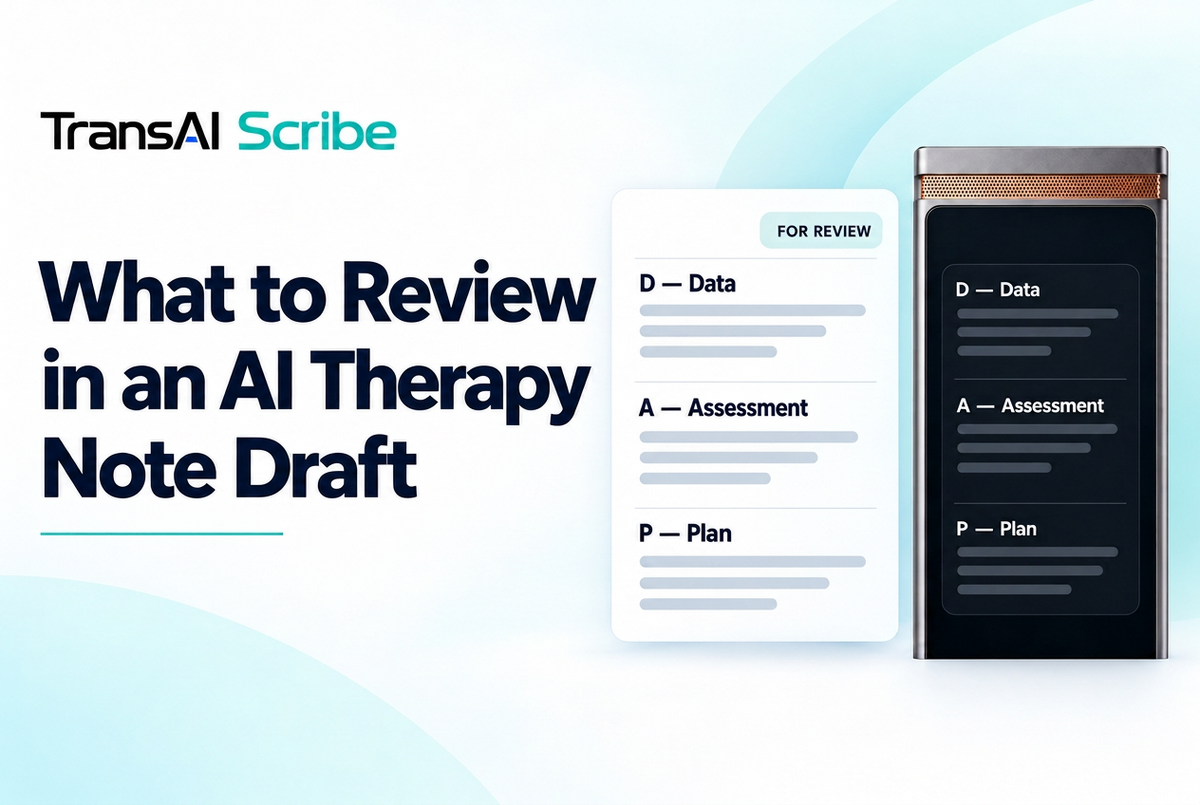
An AI-generated therapy note should begin as a structured draft—not a finished clinical record. Before it enters the chart, the therapist should check the facts, add clinical context, remove unnecessary personal detail, and make sure the assessment and plan reflect their own professional judgment.
The note format matters because it shapes what the clinician looks for. SOAP, DAP, and practice-specific templates organize information differently, but the review task remains the same: turn a generated draft into a note the clinician can stand behind.
This guide explains what to review in an AI therapy note draft and how to evaluate whether the draft fits the way your practice documents care.
The short answer
Start with five checks: factual accuracy, relevant clinical context, a clinician-owned assessment, a usable plan, and appropriate detail for the record. The AI can organize the draft. The clinician decides what the final note says and what enters the record.
Why note structure matters before review begins
A long transcript is not the same as a useful session note. A structured draft helps the clinician see whether the information is in the right place and whether anything important is missing.
Common formats include:
- SOAP: Subjective, Objective, Assessment, and Plan.
- DAP: Data, Assessment, and Plan.
- Custom templates: A practice- or organization-specific structure with its own required fields and language.
The best format is not the one with the most sections. It is the one that fits the practice's documentation requirements and makes review easier. A therapist should still confirm that the chosen template matches organizational policy, payer expectations, and the purpose of the record.
Five checks for an AI-generated therapy note draft
1. Are the session details accurate?
Check names, dates, reported events, interventions, responses, and follow-up details against what occurred. A fluent sentence can still contain an incorrect detail or attach a statement to the wrong speaker.
Correct factual errors first. They can affect every later section of the note.
2. Does the draft include the clinical context that matters?
A draft may capture what was said without explaining why it matters. Add the context needed to understand changes since the previous session, the purpose of an intervention, the client's response, and any relevant pattern or risk consideration.
At the same time, remove conversation details that do not belong in the clinical record. More text is not always a better note.
3. Does the assessment reflect the clinician's judgment?
The assessment should not become an unexamined summary of the conversation. Review whether it accurately connects the observed or reported information to the clinician's interpretation.
Edit language that is too certain, too vague, or inconsistent with the clinician's evaluation. The clinician—not the AI draft—owns the assessment.
4. Is the plan specific and usable?
Check that the plan reflects the actual next step. This may include a practice exercise, follow-up topic, referral, monitoring need, or the timing of the next session, depending on the encounter and the clinician's judgment.
Remove actions that were not agreed upon. Add details the draft missed. A useful plan should help the clinician understand what happens next without overstating what was decided.
5. Is this the right amount of detail for the record?
Therapy conversations often contain more personal detail than the chart needs. Review the draft for unnecessary names, quotations, background, or sensitive details that do not serve the clinical record.
The final note should follow the practice's documentation policies and the clinician's professional obligations. An AI draft does not determine those requirements.
What a DAP draft can make easier to inspect

A DAP draft separates the session into three reviewable parts:
What the client reported, what the clinician observed, and what occurred during the session.
The clinician's interpretation of the relevant information—not a diagnosis or conclusion the draft should make on its own.
The agreed or clinically appropriate next steps, reviewed and confirmed by the clinician.
The accompanying DAP image is a fictional, illustrative excerpt. It shows the structure and review points; it is not a claim about an unedited product output or a complete clinical-note standard.
Should the full therapy session be recorded?
Not necessarily. The input route should fit the practice, the setting, and the client's choice.
With TransAI Scribe, a structured draft can begin with a session recorded with the client's consent or with the clinician's own post-session dictation. The second route gives the clinician another option when the full conversation is not recorded.
Recording and consent requirements vary by jurisdiction, organization, and care setting. A note-taking device does not decide whether recording is appropriate. The clinician and practice remain responsible for following the requirements that apply to them.
How TransAI Scribe fits the review process
TransAI Scribe for therapists turns an approved session recording or post-session dictation into a structured draft using SOAP, DAP, or a custom template. Core transcription and note generation happen on the device without requiring an internet connection.
The clinician then checks the details, adds context, adjusts the assessment and plan, removes information that does not belong in the chart, and decides what becomes part of the record. For the full input-to-draft sequence, see how TransAI Scribe works.
Questions to ask when evaluating an AI therapy-note draft
Can I use the note format my practice already uses?
Check which standard formats are available and how a custom template is set up. Ask to see a draft in the structure you actually use rather than judging the product from a generic sample.
Can I review and edit every section before export?
The clinician should be able to correct details, add context, change the wording, and decide what leaves the drafting environment. Confirm the exact review and export process during a demo.
How much rewriting will my real notes require?
Evaluate this with realistic, appropriately handled test material and your own template. Look beyond whether the sample reads smoothly. Check accuracy, section placement, clinical usefulness, editing effort, and how the reviewed text enters your existing record system.
The useful output is a draft you can review
A session-note tool should make the review task clearer, not hide it. Start with the right structure. Check the facts and context. Apply clinical judgment to the assessment and plan. Then decide what belongs in the record.

发表评论
所有评论在发布前都会经过审核。
此站点受 hCaptcha 保护,并且 hCaptcha 隐私政策和服务条款适用。